


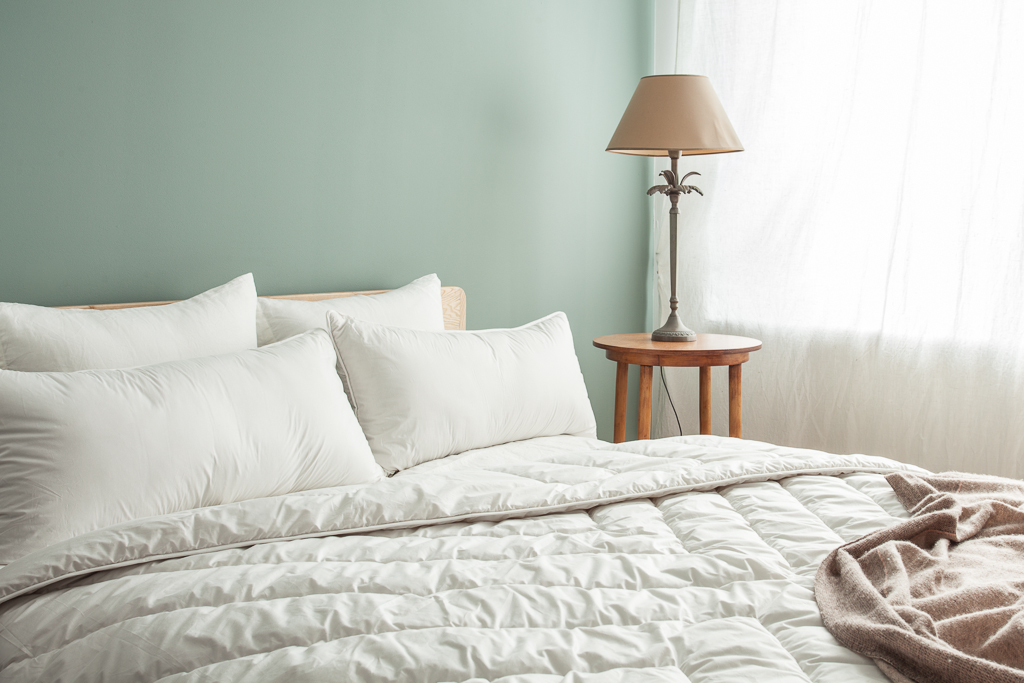
What role, then, can a well-chosen duvet play in helping us drift off to sleep? Which duvet will make us feel more rested after a night under it?
Of course, there is no single answer to this question, as it is highly individual. When choosing a duvet, we simply need to understand which factors might cause our sleep to be lighter and less restorative:
Duvet selection made easy
Synthetic-filled duvets
The advantage of a synthetic duvet is the ability to wash it frequently in a washing machine at high temperatures (always check the care instructions on the label, of course). However, frequent washing will mean the duvet will only last a year or two.
Natural-filled duvets
Available on the market are duvets filled with alpaca wool, cashmere, silk, or cotton, often with hypoallergenic certification. Natural duvets have many advantages (outlined below), but for allergy sufferers, their drawback is that most cannot be washed in water in a washing machine—only dry cleaned—or if washable, only at low temperatures. Ventilation is recommended, especially in freezing conditions (below 18°C, dust mites die) or in sunlight.
What temperature is best for sleep?
It is recommended to sleep at around 17°C. If the bedroom is cooler or significantly warmer, it may disturb our sleep. Many of us have experienced sleepless nights during hot summer evenings when we were too warm even under the sheets.
Body temperature during sleep
During sleep, our body temperature changes, causing us to either sweat or feel cold. Both reactions significantly disturb sleep, slowing down physiological functions. The body’s temperature, usually around 36.6°C, drops by approximately 1°C at night, reaching its lowest point around 5 a.m. If we are too warm, the deep sleep phase becomes very short. Extending deep sleep not only improves sleep quality but also aids in physical and mental regeneration. As the immune system strengthens during sleep, thermoregulation—avoiding both overheating and excessive cooling—is essential.
Therefore, the type and level of duvet filling should be matched to the season, bedroom temperature, and individual perception of warmth and cold. Some of us are naturally chilly—look for a warmer duvet for most of the year—while others are always hot.
We Have the Following Options:
Synthetic duvets
Primarily practical and among the most affordable on the market. As mentioned, they can often be machine washed at higher temperatures.
However, they are not very breathable and can cause sweating. This often happens when I sleep under a synthetic duvet in a hotel and wake up feeling overheated.
Down or feather-filled duvets (including goose or duck down mixes)
There are many types of down duvets, differing by the type and origin of the filling (Siberian, Hungarian, Polish Masurian, Scandinavian goose down, or the most expensive eider duck down), as well as the weight and warmth level.
The advantage of a down duvet is its relatively light weight, excellent insulation, and warmth.
The downside? Being an excellent insulator, down does not easily allow air circulation. Under a down duvet, we warm up quickly when cold, but once our body temperature rises slightly during the night, we often start to sweat. Some modern down duvets include sewn-in vents or panels made of the same fabric as the cover or mesh to aid thermoregulation. Warm and humid conditions also encourage dust mites.
TOG Scale – What Is TOG?
To determine the warmth of down duvets, several rating systems exist. The most precise is the TOG scale, a scientific measure of thermal insulation, used mainly in the UK and Western Europe. One TOG equals 0.1 m²K/W. The scale ranges from 3 TOG for ultra-light duvets to 16.5 TOG for very warm winter duvets.
Wool duvets – characteristics
Duvets filled with sheep wool are generally heavier, which not everyone prefers. They release excess heat while retaining moisture. Wool is known for its therapeutic properties. Lighter wool duvets include those filled with camel wool, cashmere, or alpaca wool. These are natural and breathable.
In our humble opinion, the very best are duvets filled exclusively with pure alpaca wool. Why?
Alpaca wool – characteristics
Thermoregulation
Alpaca wool comes from Andean highlands, where animals endure both intense frost and heat. Its fleece is a natural marvel: its properties adjust depending on the temperature. This is why an alpaca duvet adapts to body temperature changes during sleep. When cold, it warms you; when too hot, it releases excess heat.
Moisture wicking
Alpaca wool does not retain moisture, keeping you dry and comfortable. There is no worry of waking up sweaty.
The only consideration is choosing the right level of filling for your body, the season, and bedroom temperature.
Duvet Fill Levels:
Contains 200g of alpaca wool per m² and is ideal for late spring and summer, or for those who rarely feel cold and tend to sweat easily.
Contains 400g of alpaca wool per m² and can be used throughout the year in European climates. On particularly cold nights, some may prefer an additional blanket, and during hot summer nights, a sheet may suffice. Remember, perception of warmth is very individual, depending on house temperature, sleepwear, and personal preference.
Approximately 50% heavier than an all-year duvet, though some may still find it relatively light. Alpaca fibre is six times warmer than sheep’s wool. Contains 600g of alpaca fibre per m². Ideal for autumn and winter for those prone to cold or with circulation issues.
In autumn, when temperatures fluctuate, a “Four Seasons” set from MyAlpaca is an excellent solution, combining two alpaca wool duvets. For warmer evenings, the lighter 200g duvet suffices.
When the night promises to be colder, it is easy to combine the summer duvet with the all-year duvet into a single, double-layered duvet. How to do it? It’s simple – MyAlpaca duvets have loops sewn into the binding at each corner and in the middle of each side. To join the two duvets, simply tie the loops together. Done!
[pw-products=35,84,36,85]
Silk duvets
Silk duvets are natural but not as warm as wool ones. Silk provides both insulation and breathability and does not attract dust. Ideal for summer. Most silk duvets should not be washed in water or dry-cleaned chemically, but airing them outside is recommended.
Summary – which duvet to choose?
In summary, choose a duvet suitable for the season. You can change duvets throughout the year or sleep under a slightly lighter duvet, adding a blanket in winter. If you are not allergic, focus primarily on thermal properties and seek expert advice in a specialist store. A good duvet, ensuring sleep comfort, is an investment in both your health and long-term wellbeing.

